Ankle Sprains & Instability
Ankle sprains are among the most common injuries. They occur when the foot twists or rolls beyond its normal range, stretching the supporting ligaments beyond their normal length. In some cases the force is enough to tear the ligaments, and some patients hear a loud “pop.”
Symptoms include swelling, pain, bruising and often instability when walking. Diagnosis is based on the history of the injury and physical exam. X-rays help rule out fractures, and an MRI can confirm the diagnosis or help if symptoms last longer than expected.
Initial treatment is conservative: rest, ice, elevation and anti-inflammatories. Crutches and a removable walking boot are often needed early on. Once acute pain and inflammation resolve, physical therapy builds strength and stability while the ligaments continue to heal.
Most patients do well and see their symptoms resolve within three to four months. Some sprains remain symptomatic six months after injury; patients with ongoing instability despite conservative care may need a surgical procedure to tighten the injured ligaments.
Achilles Tendinitis & Rupture
The Achilles tendon connects the calf muscle to the heel and is essential for walking, running and jumping. Achilles tendinitis — inflammation from repetitive stress — causes pain at the back of the ankle and heel, tightness in the calf, pain that worsens with activity, and swelling or thickening of the tendon.
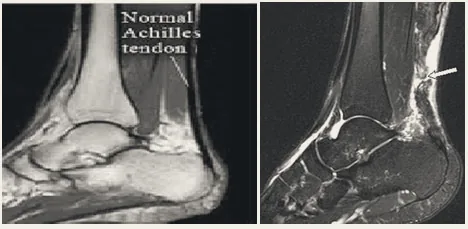
Diagnosis is made by physical exam. X-rays can show bone spurs where the tendon attaches, and an MRI is sometimes needed to rule out partial tearing. Treatment is generally conservative: ice, anti-inflammatories and a dedicated stretching regimen. Impact activities such as running and jumping should stop until the tendon heals, to prevent rupture.
Achilles tendinitis can become chronic. PRP (platelet-rich plasma) injections are one option for chronic cases; if all conservative care fails, surgical debridement can remove chronic scar tissue from the tendon.
An Achilles rupture is a traumatic tear of the tendon, either at its attachment or within the tendon itself. It usually happens while running or jumping and is most common in men over 40. It causes pain, swelling, bruising, difficulty walking and a palpable defect; MRI confirms the diagnosis. Treatment is surgical — suturing the ends together or anchoring the tendon back to the heel, depending on the tear — followed by four to six weeks in a cast and then physical therapy.
Ankle Fractures
Three bones form the ankle joint: the tibia (shin bone), the fibula (the smaller bone of the lower leg), and the talus, which sits between the leg and the heel. Ankle fractures can involve one, two or all three.
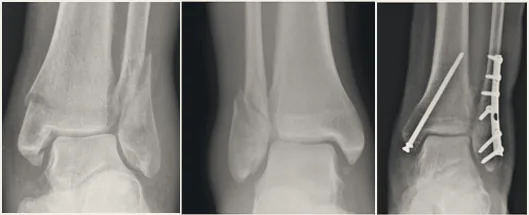
Treatment depends on the fracture's location, displacement, the number of bones involved, and joint involvement. Symptoms include pain, swelling, bruising and possible deformity. Diagnosis is confirmed by X-ray, with CT if needed.
A fracture that is not significantly displaced and involves only one bone can be treated in a cast for four to six weeks. Displaced fractures, fractures with multiple fragments or more than one bone, or those involving the joint or a dislocation will likely require surgery with plates and screws. Physical therapy follows to regain motion and strength.
Plantar Fasciitis
Plantar fasciitis causes pain at the bottom of the heel when the thick band of tissue supporting the arch — the plantar fascia — becomes irritated and inflamed. It typically develops over time without a specific injury.
Contributing factors include calf and Achilles tightness, a very high arch, repetitive impact such as running and jumping, and heel spurs. The classic symptom is heel pain with the first steps in the morning or after rest, which eases after a few minutes of walking and worsens after activity. Diagnosis is made by physical exam; X-rays help rule out other causes.
Most patients improve with conservative care focused on stretching and reducing inflammation — ice, anti-inflammatories, physical therapy, orthotics or heel cups, night splints and cortisone injections. Surgical options exist for refractory cases.
Ankle Cartilage Damage & Loose Fragments
Cartilage covers the ankle joint surfaces. Arthritis is the most common cause of damage, thinning the cartilage and leaving defects. Localized damage in an otherwise healthy ankle usually follows an injury.
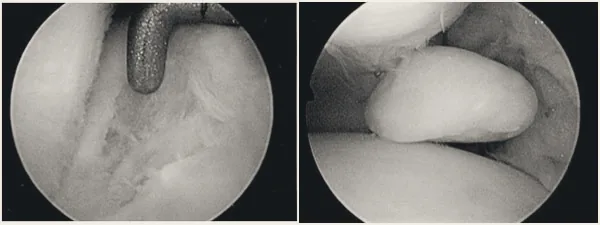
Diffuse damage causes stiffness, soreness and pain. Cartilage flaps or loose fragments can cause popping and catching during movement. X-ray and MRI confirm the diagnosis.
For mechanically symptomatic damage or loose fragments, arthroscopy can smooth defects and remove detached fragments. Cartilage cannot be replaced and arthritis symptoms may persist, but popping, catching and clicking typically improve.